
The Refugee Investment Facility (RIF) Releases Its 2025 Impact Report
A date processing company in Jordan’s Jordan Valley creating seasonal employment opportunities during harvest season. A food processor in Uganda expanding its sourcing to refugee and host community farmers. A water company in Turkana increasing access to locally produced drinking water in one of Kenya’s most water-stressed regions.
These businesses operate in different sectors, countries, and markets. Yet they share something important: they create jobs, strengthen local value chains, and expand access to essential goods and services that make long-term economic inclusion possible in displacement-affected communities.
The question is whether these enterprises can access the capital and support needed to grow.
The Refugee Investment Facility (RIF) was established to help answer that question.
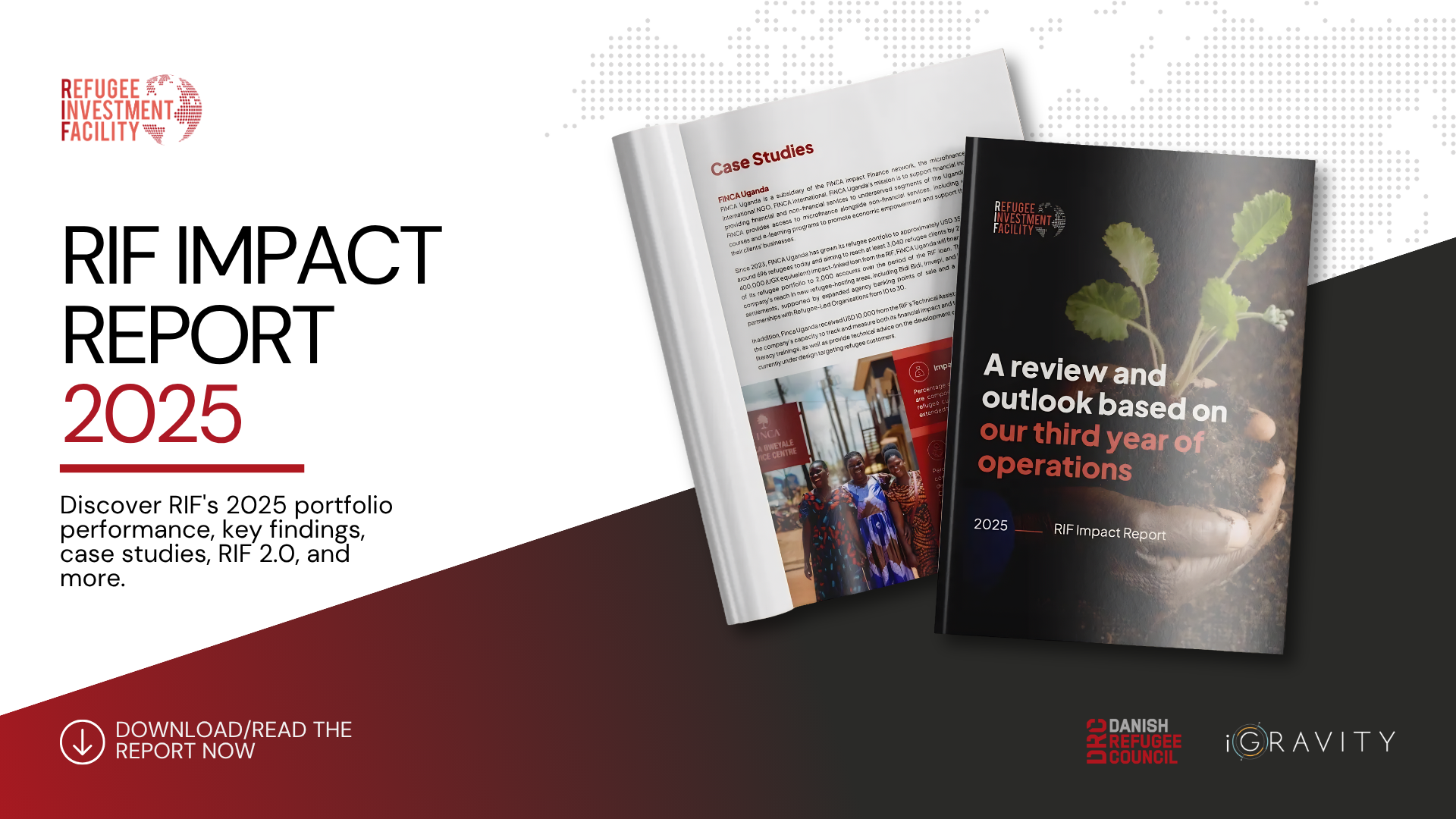
Today, RIF is pleased to release its 2025 Impact Report, marking the facility’s third year of operations and offering a closer look at how impact-linked finance and technical assistance supports businesses operating in displacement-affected markets.
Why The RIF Model Works
Addressing these challenges requires more than capital alone. It requires a financing model that enables these businesses to maintain or build their focus on refugee and host community populations, as they grow their businesses.
RIF does this through impact-linked loans that are rewarded through interest rate reductions for the direct and measurable impact these businesses have on the refugee and host communities they serve. Alongside financing, tailored technical assistance helps them strengthen their operations, improve impact measurement, and scale sustainably.
Powered by Partnership
This approach is made possible through a partnership between iGravity and the Danish Refugee Council (DRC).
iGravity brings expertise in impact advisory, investment management, and impact measurement & management, while DRC contributes decades of humanitarian experience and deep operational knowledge across displacement-affected regions. Together, they combine financial expertise with on-the-ground presence and networks, enabling RIF to invest in markets where conventional finance often struggles to operate.
What the Report Reveals
The 2025 Impact Report provides a comprehensive overview of RIF’s strategy, investment approach, and portfolio performance across Uganda, Jordan, Kenya, and Colombia.
It explores the facility’s investment strategy, 2025 portfolio performance, highlights how technical assistance complements impact-linked loans, and shares case studies and impact stories from investees including FINCA Uganda, Okeba, LIFTA Kenya, and Byeffe Foods. It also reflects on investment opportunities that did not progress and lessons learnt, reinforcing RIF’s commitment to transparency, learning, and continuous improvement.
Key Findings
Three years into its journey, the results demonstrate growing momentum.
In 2025, businesses supported by RIF reached 35,101 people, 30% of whom were refugees, through employment opportunities, financial inclusion, and access to essential products and services. The portfolio expanded to seven active investments, including four new investments completed during the year.
The facility has now mobilised more than USD 8 million in investor commitments, with a gross loan portfolio of USD 2.12 million. Since inception, over 200 enterprises have progressed through RIF’s investment pipeline, reflecting a disciplined approach to identifying businesses capable of delivering both sustainable financial performance and meaningful impact.
These results show that refugee-inclusive investing is not simply an emerging idea—it is becoming a practical model for building stronger and more inclusive economies.
Impact in Practice
The numbers tell an important story, but their true value lies in the people and communities behind them. Throughout the report, RIF demonstrates how strategic investment can translate into tangible, everyday impact.
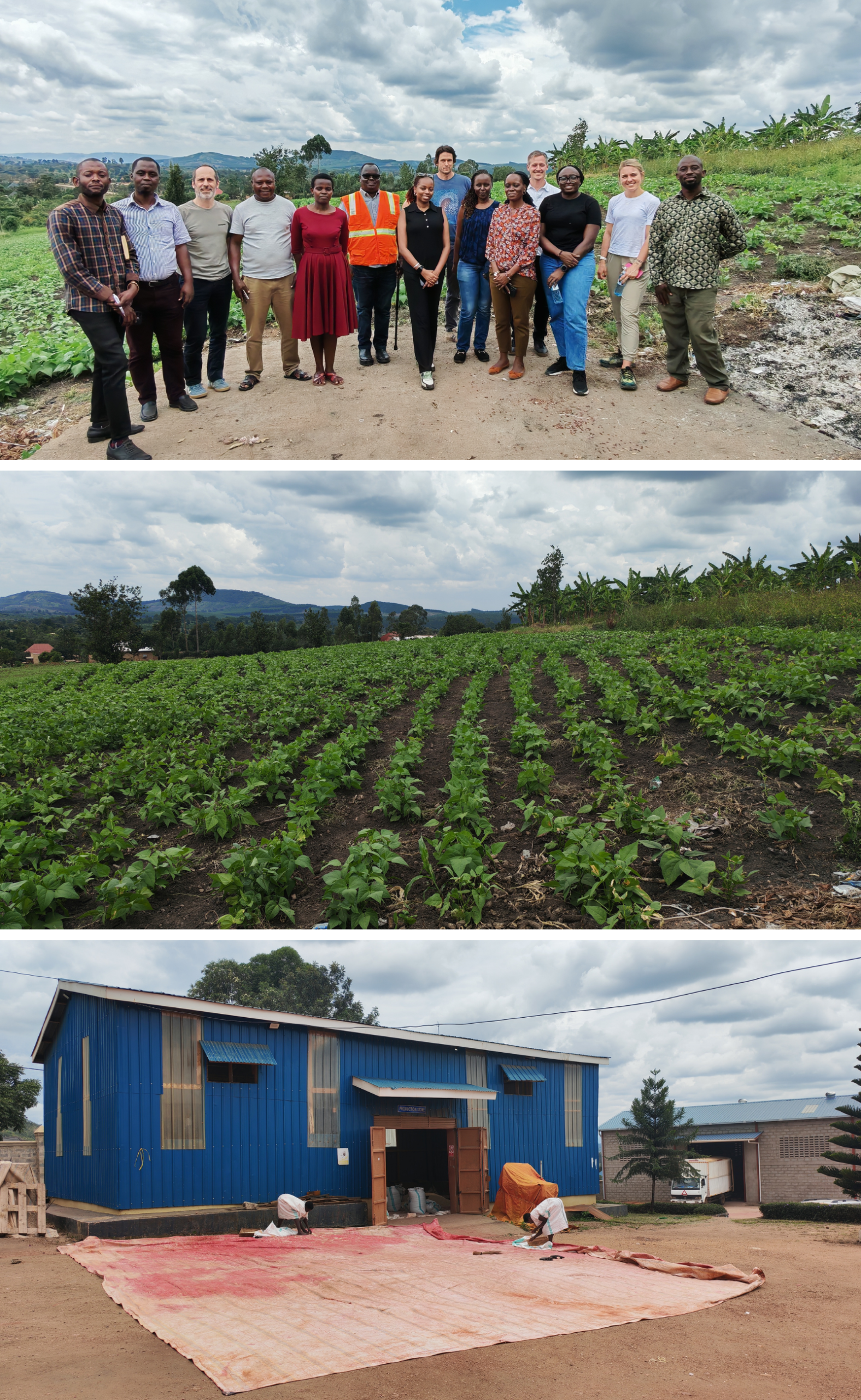
Okeba illustrates the role businesses can play in turning economic inclusion into something tangible and measurable. Operating across Uganda’s agricultural value chain, the company aggregates, processes, and markets maize, soybeans, and beans while connecting smallholder farmers to certified inputs, agronomic training, financial services, and reliable markets. Okeba works with approximately 15,000 farmers, including more than 4,000 refugee farmers in Kyaka II and Rwamwanja refugee settlements.
With support from the RIF, Okeba has expanded its working capital to expand seed multiplication and distribution, increase grain aggregation, and provide input credit to farmers, while technical assistance has helped strengthen impact measurement systems and farmer support mechanisms. Since receiving RIF financing, the company has supported 3,493 smallholder farmers in accessing goods and services and contributed to 579 decent work opportunities for refugees and host community members.
Okeba’s experience reflects an important aspect of the RIF model: investing in the businesses that sit at the centre of local economies can create opportunities that extend well beyond the enterprise itself and into the wider communities it serves.
Looking Ahead
As RIF enters its next phase, the focus is on building on the progress made over the past three years.
The facility will continue expanding its portfolio, strengthening partnerships, and refining its investment approach to reach more businesses operating in displacement-affected markets.
The 2025 Impact Report is more than a record of achievements. It is evidence that refugee-inclusive investment can help build stronger businesses, more resilient communities, and more sustainable local economies—offering a model that is increasingly relevant in today’s landscape.
The RIF 2025 Impact Report offers a closer look at how impact-linked loans and technical assistance are helping businesses create lasting economic opportunities in displacement-affected communities. From portfolio performance and key findings to investee stories and lessons learned, the report provides valuable insights into the future of refugee-inclusive investing.