

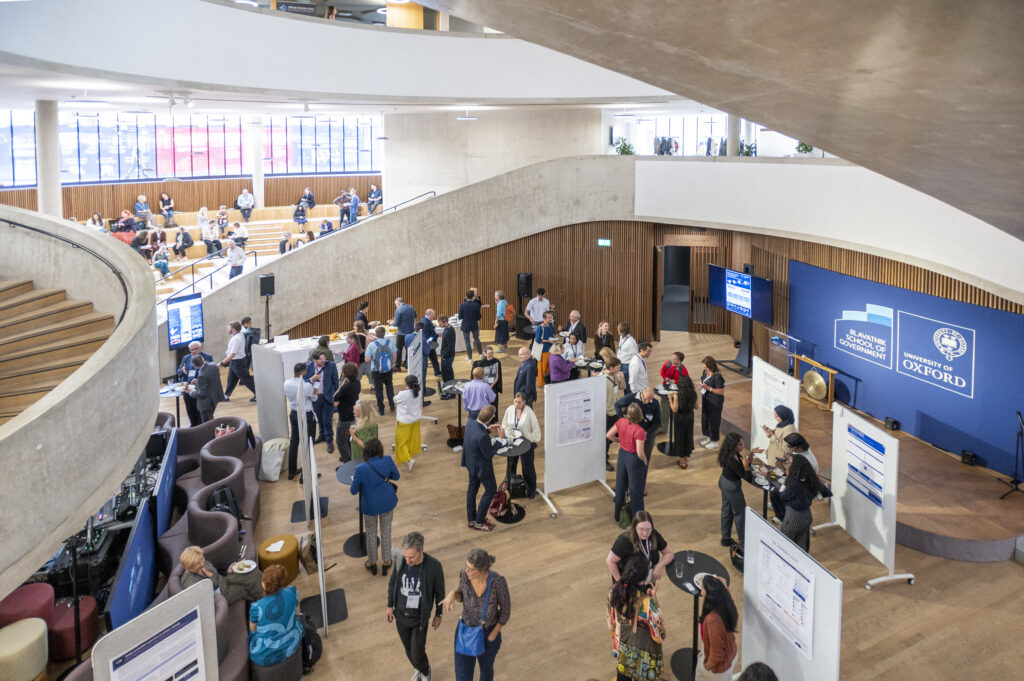
On 4 September, iGravity joined a Croissants & Collaborations session at the Social Outcomes Conference 2026 (SOC26), hosted by the Government Outcomes Lab at Oxford’s Blavatnik School of Government.
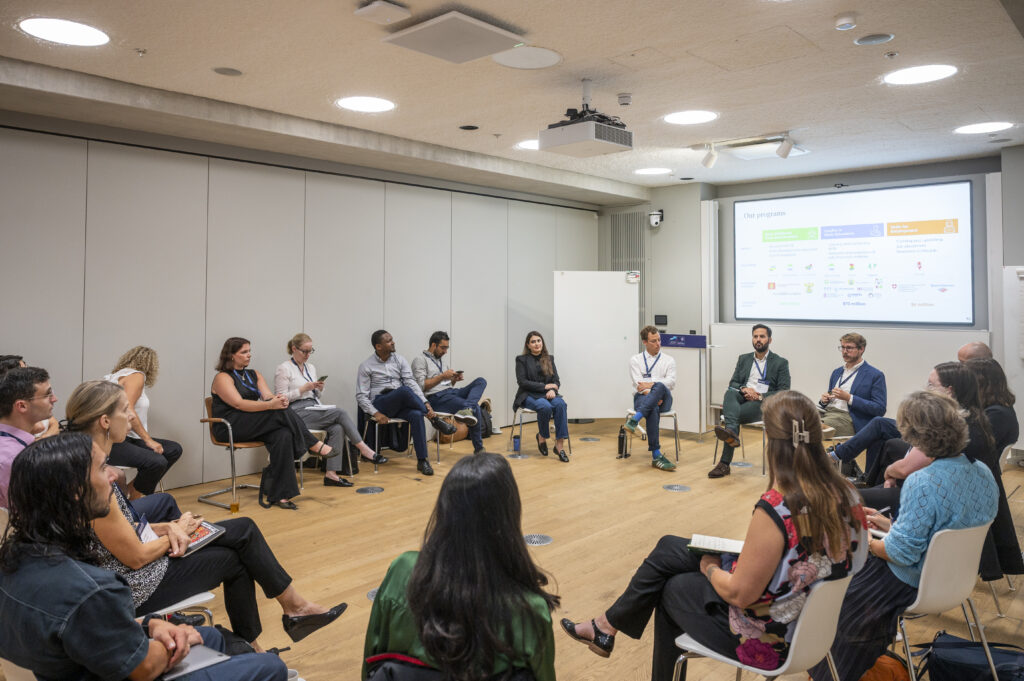
The session explored how outcomes-based financing (OBF) can be used to improve education outcomes while bringing together different forms of public, philanthropic and private capital. Rather than presenting outcomes-based finance as a single model, it deliberately compared three approaches positioned at different points of the financing spectrum: the Education Outcomes Fund (EOF); the Incentives for Learning (IfL) programme, piloted with low-fee private schools in Kenya; and iGravity’s own Impact-Linked Fund for Education (ILF Education).
A changing financing landscape
The common premise across all three approaches is that the way funding is structured can influence behaviour. By linking some element of finance to measurable education results, organisations, schools and enterprises may have stronger incentives to focus resources and management attention on the outcomes that matter. The mechanisms differ significantly, however, in who is incentivised, who carries financial risk, and whether a sustainable pathway exists once philanthropic subsidy is withdrawn.
ILF Education: Catalytic finance for education enterprises
ILF Education is a catalytic fund that pays organizations more when they deliver verified improvements in children’s and youth’s learning and vocational outcomes. Since 2022, it has supported 20 unique organizations across 15 countries through 22 transactions and engagements — including 16 Social Impact Incentives (SIINCs), 2 Impact-Linked Loans (ILLs), 2 Impact-Ready Matching Funds (IRMFs), 1 Impact-Linked Payment (ILP), and 1 milestone-based Technical Assistance arrangement — supporting enterprises that improve learning and vocational skills outcomes for children and youth.
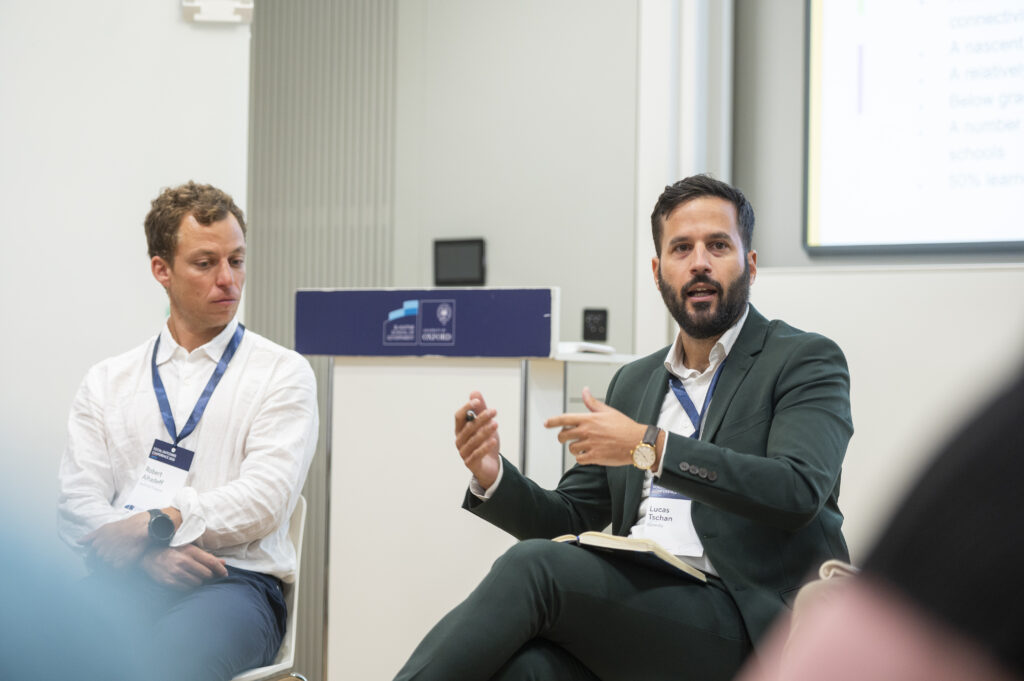
At SOC26, iGravity was represented on the panel by Lucas Tschan, Head of Advisory, who discussed how the model focuses on education enterprises with viable business models that may struggle to attract commercial investment because they serve lower-income populations, operate in difficult markets, or sell to governments. One mechanism discussed was the social impact incentive: an enterprise agrees to impact targets and receives an incentive if those targets are achieved, while also raising external repayable capital — rewarding the desired outcome while building a pathway toward financial sustainability.
A recurring example concerned a company providing technology that supports children’s Arabic reading and speaking, working in public schools in Egypt. The outcome payment was deliberately designed not to cover the enterprise’s full cost, so the company retained “skin in the game” and had an incentive to build a genuinely sustainable market — rather than deliver only while subsidy was available. The session heard that the incentive had influenced the company’s decision to remain active in Egypt and increase its work with public schools.
Speakers also cautioned against unrealistic expectations about private-capital leverage in education. Unlike sectors such as fintech, basic education and early childhood are not spaces where rapid commercial growth is easily achieved — so blended finance in this space should be judged less on the volume of private money it “crowds in,” and more on whether it enables capital to reach socially valuable areas that would otherwise remain underfinanced.
Data as both an input and an output
Outcomes-based finance requires credible baselines and verification, yet participants noted that education systems, public and low-fee private alike, often lack reliable data even on basic matters such as where schools are located and how many learners they serve. Participants argued that the first stage of an outcomes-financing programme may need to be treated explicitly as a learning and baseline-building period rather than assuming accurate information already exists.
Equity and unintended incentives
If schools are rewarded for absolute academic performance, they could in theory have a reason to avoid children who are more difficult or costly to support. Participants stressed the importance of measuring learning growth, considering special educational needs and disability, and disaggregating results by gender, so that programme design does not inadvertently reward exclusion.
Redefining sustainability
For some models, sustainability may mean government eventually financing and operating a programme itself. For others, it may mean commercial revenue becoming sufficient to absorb the cost of incentives, or repayable capital replacing grants. For an impact-linked model like ILF Education, that pathway can run through enterprises graduating toward normal debt or equity markets as their business models mature. The relevant question may not be whether external subsidy disappears entirely, but whether public or philanthropic capital is being used more strategically, efficiently and catalytically over time.
Overall, the session suggested that outcomes-based finance is best understood not as a single funding product, but as a set of design principles and financing tools that can be combined, sequenced and adapted to bring different forms of capital into parts of education that conventional financing struggles to reach.
If you are interested in learning more about ILF Education or exploring opportunities for collaboration, feel free to reach out to us at impact@igravity.net.
iGravity was represented on the panel by Lucas Tschan, Head Advisory, alongside Joseph Di Silvio (EOF), Robert Alhadeff (Jackfruit Finance), Poornima Kharbanda (Global Schools Forum) and Caleb Leseine (IDinsight). The session was hosted by the Government Outcomes Lab, University of Oxford, as part of SOC26.