
Reflections from Climate Week Zurich 2026: Financing Climate Solutions at Scale
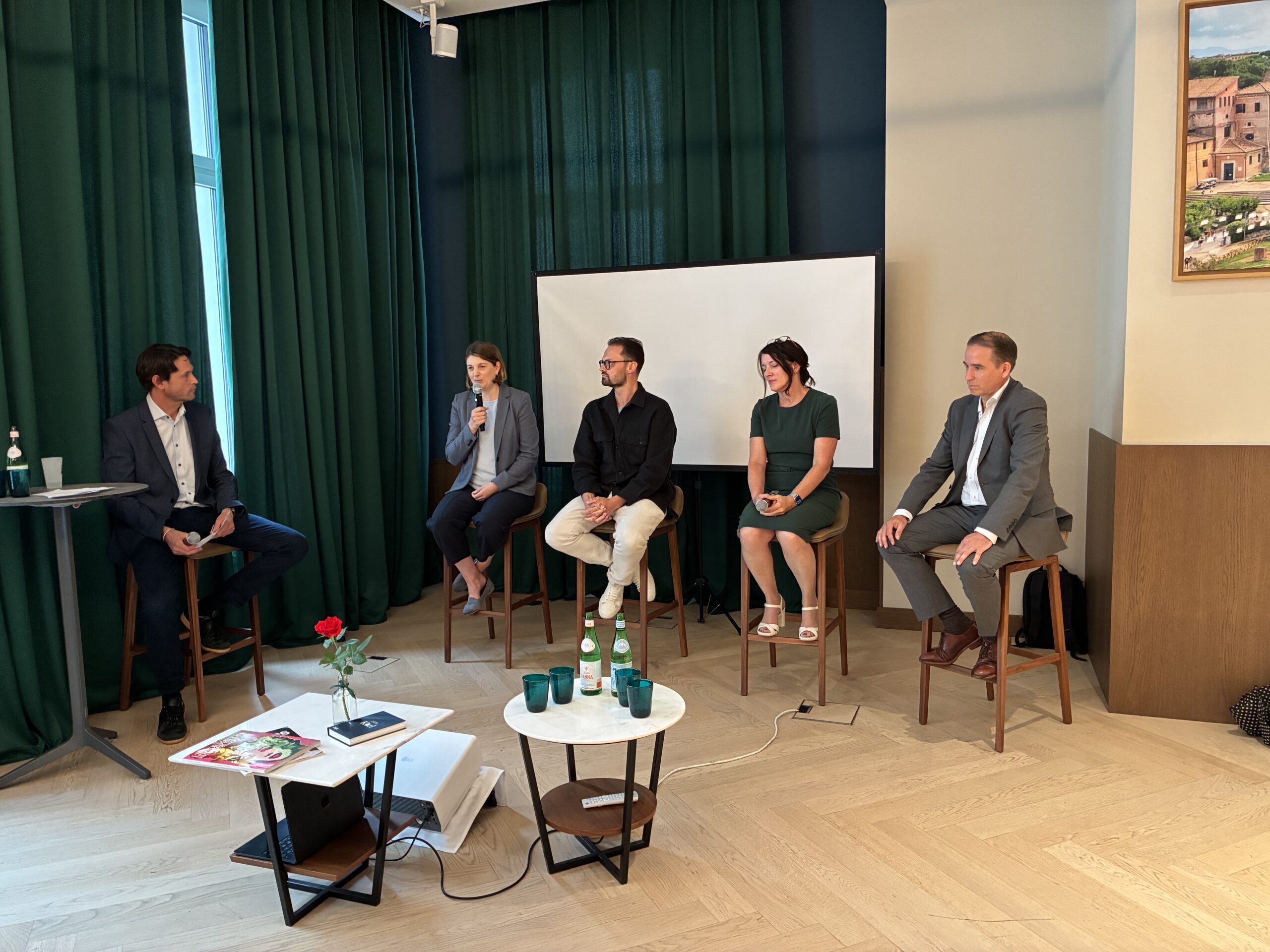
What an inspiring experience to contribute to the first edition of Climate Week Zurich 2026.
From the very beginning, the tone was set by a powerful opening at the Open House of Zurich, where history, art, and emotion came together to reflect the urgency of the climate transition. One message stood out clearly: climate action is ultimately about people, and it will be driven by people. As Leslie Johnston from Laudes Foundation put it, this was “spot on.”
iGravity had the privilege of hosting a diverse panel of senior leaders from across investment, philanthropy, and climate finance to explore one central question: how do we finance climate solutions at scale?
Key themes that emerged from the discussion:
• The financing gap remains immense. Only 14% of the estimated USD 2.4 trillion needed annually for climate finance in emerging markets and developing economies is currently being met. Sectors such as agriculture, land use, and food systems remain significantly underfunded, with domestic corporates, banks, households, and public actors still accounting for most climate finance flows. (Patrick Elmer, iGravity.)
• Philanthropy has a pivotal role to play — not only as a funder, but as a catalyst helping reshape how finance can better serve humanity while enabling investments that would otherwise not happen. (Leslie Johnston, M.Sc., Laudes Foundation.)
• Driving systemic change requires backing the right people and ideas, while remaining open to experimentation and new definitions of success. Identifying and empowering the actors capable of delivering meaningful change remains essential. (Rudolf Hilti, The System Change Foundation.)
• Progress demands courage. Taking new risks — not necessarily higher risks — actively managing them, and remaining committed to impact is challenging, but tangible results are emerging. (Frederic Berney, iGravity.)
• Climate finance is fundamentally about long-term transformation. It requires patience, quality-focused investment approaches, and time horizons that allow real change to materialize while generating sustainable financial returns. (Alice Balmer, Forma Futura Invest AG.)
• Collaboration remains central. Building platforms that bring together public, private, and philanthropic actors will be critical to scaling solutions. Blended finance is part of the answer, but important questions remain around leadership, coordination, and market building.
We also heard strong signals from both the audience and panelists: foundations are evolving their approaches, new financial tools continue to emerge, and there is growing willingness across the ecosystem to experiment, collaborate, and adopt more systemic perspectives. At the same time, pension funds and institutional investors are increasingly being called upon to play a larger role.
Encouragingly, data shared by active investors in the room suggested that non-performance rates remain below 2%, reinforcing the potential of blended finance approaches and performance-based incentives to unlock new markets.
The room brought together decision-makers from across sectors and continents — public, private, entrepreneurial, and philanthropic — united by a shared ambition to challenge the status quo and accelerate meaningful change.
A heartfelt thank you to our distinguished panelists, partners, and everyone who contributed to such an engaging discussion. Special thanks as well to the Climate Week Zurich team, our co-sponsor Forma Futura, and our event partners at Regus – IWGPLC, and Intenso – Luxury Italian Food for creating such a unique environment for these conversations.