iGravity’s first annual impact report brings together the combined results of the facilities we manage: Balim Investments, the Refugee Investment Facility, the Impact-Linked Finance Fund and our Multi-Manager strategies, together with our advisory work. It is aligned with the Impact Reporting Norms set out by Impact Frontiers.
This page presents the highlights of the report. The full report, including detailed data tables, methodology and additional case studies, will be available as a PDF soon.
Full report (PDF) · coming soon
Foreword
A letter from our CEO and Head of Impact
Dear friends and partners,
We are proud to share iGravity's first annual impact report. Proud of what our team and partners have achieved so far, and realistic that, given the scale of the challenges we work on, this is only a first step.
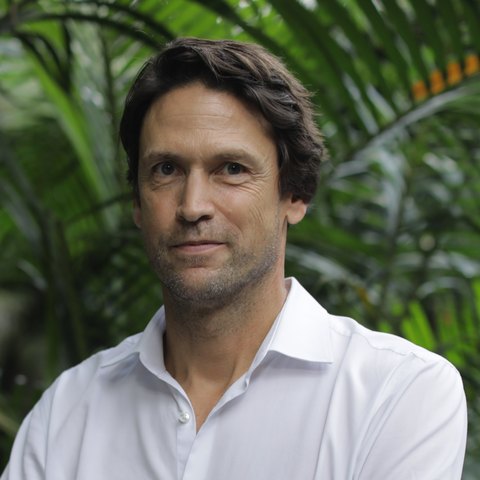
PatrickCEO, iGravity
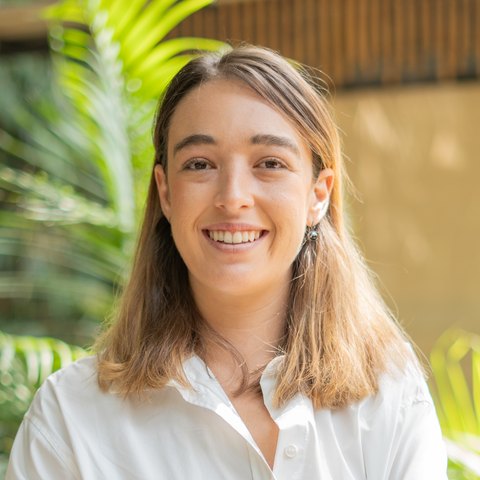
BelénHead of Impact, iGravity
Dear friends and partners,
We are proud to share iGravity's first annual impact report. Proud of what our team and partners have achieved so far, and realistic that, given the scale of the challenges we work on, this is only a first step.
Since 2017, our work has started from a simple observation: good ideas often stay siloed, partnerships often stay transactional, and capital that could change lives too rarely reaches the enterprises best placed to create impact. Everything we have built since is our response to that, made possible by the commitment of our team and partners. Our aim has stayed the same throughout: to bridge capital and purpose in ways that create lasting change.
This report is where that answer becomes a single, shared story. For the first time, we step back from the individual reports of the facilities we manage — BALIM, the Refugee Investment Facility, the Impact-Linked Finance Fund, and our Multi-Manager strategies — to report on the combined results of iGravity. We built it in alignment with the Impact Reporting Norms set out by Impact Frontiers, because we believe accountability only means something when it is measured against a standard bigger than our own.
This report is less a scorecard than a waypoint on a journey we have just started walking. It draws together evaluation work already carried out across both our investment and advisory practices — the lessons learned in the field, the assumptions we have had to revise, the models that worked better than we hoped and the ones that fell short of our expectations — into a single holistic organisational view, tested against the same rigour we ask of every investment we make. None of this happens by accident: it is the product of a team and culture that treats impact measurement not as a compliance exercise but as a craft and a must.
Our Theory of Change emphasises our role as a bridge between capital and communities — mobilising capital, expertise and innovation through targeted investments and advisory support that translate into measurable outcomes: expanded access to finance, strengthened capacity and lasting, equitable impact. In 2025, our facilities reached 3.86 million individuals, financed 321,023 SMEs and directly supported 126,795 jobs across emerging markets.
We share this first company-wide report knowing it is not a finished picture, and we would not want it to read like one. Some of our frameworks and disclosures are still maturing, and we say so plainly rather than gloss over it, because a firm that names its own gaps is one you can hold accountable for closing them. We commit to setting even more ambitious targets, deepening how we measure what matters, expanding the mandates and partnerships that let us do more of this work, and continuing to learn and report back from the very communities and entrepreneurs we set out to support.
To our team, our partners, our investors, our advisory clients, and above all the entrepreneurs and communities who let us walk alongside them: thank you. This report is as much yours as it is ours, and we invite you to walk its next chapter with us.
With gratitude and continued commitment,
PatrickCEO, iGravity
BelénHead of Impact, iGravity
1 / 6
01 — Impact performance
iGravity in 2025 — at a glance
Each indicator is shown on both an and an basis. The figures cover all four mandates: the Impact-Linked Finance Fund (ESA and Education windows), the Refugee Investment Facility, Balim Investments and our Multi-Manager strategies.
3.86m
Individuals reachedPortfolio-wide
321,023
SMEs financedInclusive Economies
126,795
Jobs supportedInclusive Economies
239,098
Learners reached with education servicesLivelihoods
102,768
Hectares under sustainable managementNature & Climate Resilience
9.0m
Tonnes of CO₂e avoided or reducedNature & Climate Resilience
Exposure: figures reflect the total reach of the investee or portfolio (unattributed).
How we count
We weight each investee’s reported results by iGravity’s financing share; in the ILFF, verified results that trigger outcome-based payments are attributed in full. That is why attributed totals are lower than the combined scale of the businesses we finance.
Source
iGravity Annual Impact Report 2025 › Impact Performance: “iGravity in 2025 — at a glance” and Table 3, Aggregate impact KPIs, all facilities, 2023 to 2025 (exposure and attributed figures).
Capital raised
USD 66.1m
Capital raised by iGravity across four mandates, as of end-2025.
How 2025 compares with 2024
Change from end-2024 to end-2025.
+27%
Capital raised, USD 51.9m to USD 66.1m
2024
2025
+16%
Individuals reached, 3.3 million to 3.9 million
2024
2025
3×
Learners reached, 25,587 to 77,888 (attributed)
2024
2025
4×
Land under sustainable management, 24,093 ha to 102,768 ha
2024
2025
Source
iGravity Annual Impact Report 2025 › Impact Performance: “iGravity in 2025 — at a glance” and “Four trends stand out”; Table 3, Aggregate impact KPIs (learners on an attributed basis, land on an exposure basis).
02 — About iGravity
Who we are
iGravity is an impact investment management and advisory firm specialising in SME finance in emerging markets through private debt and innovative finance instruments. We design and manage blended investment solutions that support local enterprises, delivering financial returns and measurable impact for institutional investors and philanthropic partners.
Impact Management & Measurement (IMM) is embedded at the core of our business model and investment philosophy. Our approach is grounded in three principles: intentionality, measurability and .
2017operating since
30+specialists
FINMAlicensed private debt management
Source
iGravity Annual Impact Report 2025 › Foreword (“Since 2017”); Theory of Change and Impact Themes, Activities and Inputs (FINMA-licensed private debt management, 30+ specialists).
Our vision
“To promote a more equitable and sustainable financial system that values and integrates impact considerations alongside financial returns, channelling capital with return expectations toward high-impact enterprises in emerging markets.”
The SME financing gap
USD 5.7tn
The estimated financing gap faced by emerging-market SMEs. Enterprises in the “” are too large for microfinance and too small or unfamiliar to commercial lenders.
Source: International Finance Corporation and SME Finance Forum, MSME Finance Gap (World Bank Group, March 2025).
03 — Impact management
Impact governance at iGravity
At iGravity, impact is not a lens applied after the investment case is made; it is built into the structure of the investment process itself. The Investment Committee cannot approve an investment on financial merit alone, and the impact team is an independent function that reports directly to the CEO.
Three thematic pillars
Livelihoods
Enable individuals and households to build resilient and dignified lives by improving access to essential services and opportunities, particularly in underserved and rural communities.
Inclusive Economies
Promote equitable participation in entrepreneurship and business ownership, expand access to dignified work, and reduce structural inequalities across communities and regions.
Nature & Climate Resilience
Strengthen ecosystem resilience and support climate mitigation and adaptation through sustainable resource management, biodiversity protection and expanded access to renewable energy.
Impact management across the investment process
01ScreeningFour minimum criteria and the iGravity
02Due Diligence, alongside financial due diligence
03Investment DecisionThe Investment Committee weighs both dimensions
04Monitoring & ReportingPre-agreed impact KPIs through the holding period
05ExitDurability of impact and mission-aligned follow-on capital
Source
iGravity Annual Impact Report 2025 › Theory of Change and Impact Themes (thematic pillars and SDGs); Table 2, Impact management across the investment process: stages, activities and key tools.
04 — Advisory
Our approach in Advisory
Our advisory practice guides clients through the full innovative finance journey. Every mandate iGravity manages today began as an advisory engagement.
01
Explore
Training, exploratory workshops and feasibility studies
02
Design
Financing approaches, impact measurement frameworks and a roadmap to launch
03
Manage
The full lifecycle of a financial instrument, including IMM and reporting
04
Learn
Insights for strategy reviews and sector-wide learning
Dutch Good Growth Fund · Explore, Design & Manage
Fostering a high-performing and sustainable Entrepreneur Support Organisation ecosystem
50+candidate ESOs mapped
5country ESO systems assessed
25funders and implementers in the Coalition
Both pilot ESOs exceeded their programme quality targets and made concrete progress on financial sustainability. iGravity now acts as the Coalition for ESO Advancement’s secretariat alongside DGGF.
Source
iGravity Annual Impact Report 2025 › Our approach in Advisory: Dutch Good Growth Fund (managed by Triple Jump).
Swedfund · Design & Manage
Strengthening impact management across Swedfund’s portfolio
4steps in the investee-level TA process
3maturity levels
Since 2022, iGravity and evolutiqIA have worked with Swedfund to design and pilot a Technical Assistance offering for Impact Measurement & Management Systems (IMMS), including a proprietary Status Quo, Gap and Action Analysis tool. The work is ongoing.
Senior debt and tailored technical assistance to agriculture, water and energy SMEs, with HEKS/EPER and Somaha Foundation. Figures for its 13 portfolio companies in 2025.
iGravity Annual Impact Report 2025 › Highlights from the ILFF: ESA & Education, “Impact Performance for ILF Education and ILF ESA” (externally verified outcome data).
One daily-priced security giving qualified investors access to diversified emerging-market private debt.
1,213enterprises supported
88%small or medium in size
90%female-owned MSMEs
74%rural MSMEs
Figures are scaled to EID’s share of each underlying position.Source
iGravity Annual Impact Report 2025 › Multi-Manager Impact Strategy: EID impact performance; Table 5 (female-owned and rural MSMEs) and Table 6 (enterprises by size band).
Credit: HEKS/EPER
06 — Case studies
Case studies from our mandates
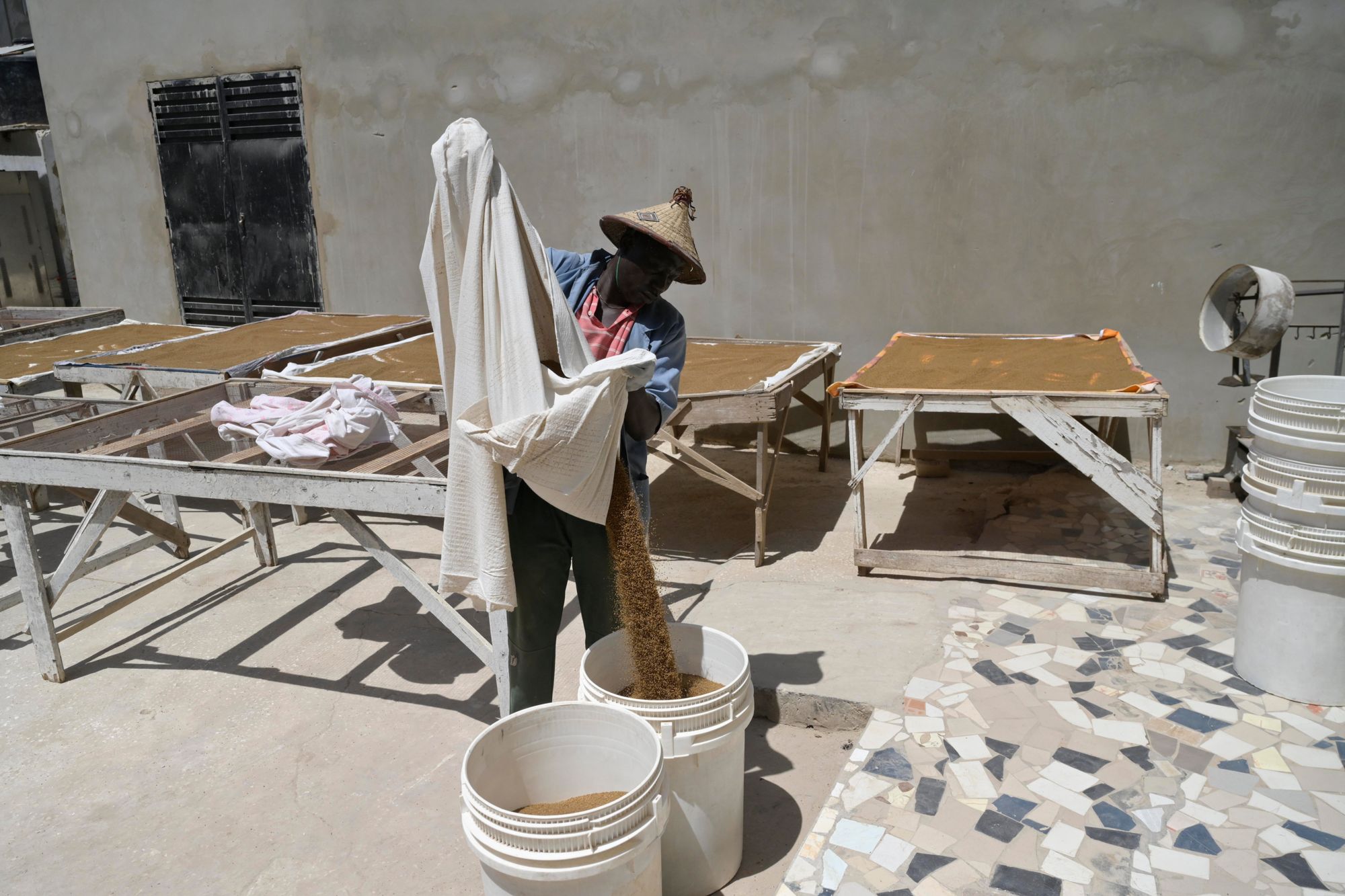
Credit: HEKS/EPERBALIM · Senegal
Kumba
~4,140
producers organised into four new cooperatives, with 1,000 delivering produce directly to Kumba in 2025.
RIF · Uganda
Okeba
579
decent work opportunities created for refugees and host community members since a USD 450,000 RIF loan in August 2024.
Credit: Upendo HoneyILF ESA · Tanzania
Upendo Honey
1.19m ha
of at-risk Miombo forests brought under structured honey sourcing; average incomes in existing communities more than doubled.
ILF Education · Lebanon
Kamkalima
+188%
verified reach among vulnerable learners, from 2,273 to 6,551 pupils by the end of Year 2.
07 — What comes next
This report marks a beginning, not a culmination
Our priorities across the portfolio
iDeepen our impact measurement
iiClose the data gaps that limit how confidently we can speak to some outcomes
iiiHold firm to precision in how we frame our results
ivScale what has been piloted and proven
Full report (PDF) · coming soon
The full iGravity Annual Impact Report 2025, including detailed data tables, methodology and additional case studies, will be available to download soon.
BALIM · Senegal
Kumba
Credit: HEKS/EPER
Kumba is a Senegal-based food-processing company, marketed under the “Kumba” brand. In 2024–25, BALIM supported Kumba through an SSNUP-funded TA project targeting farmer training, cooperative development, market linkage, and internal capacity building.
The intervention
The intervention focused on three interconnected areas: agroecological and climate-smart farming practices, direct market linkage between Kumba and farmer cooperatives, and strengthening Kumba’s internal financial and administrative systems. The project targeted 800 farmers for training and 500 new smallholder suppliers.
279lead farmers in structured training sessions
~4,140producers organised into four new cooperatives
1,000delivering produce directly to Kumba in 2025
Results
Results were mixed but meaningful. On farmer training, 279 lead farmers participated in structured sessions, each tasked with cascading knowledge to at least five group members, reaching a potential 1,395 farmers in total. Full adoption across the network is still being assessed.
On market linkage, the results were more substantial: approximately 4,140 producers were organised into four new cooperatives, with 1,000 delivering produce directly to Kumba in 2025, a genuine reduction in reliance on intermediary traders. Internally, Kumba’s financial management improved materially, with stronger expense tracking, clearer reporting, and better alignment with BALIM’s monitoring requirements.
Okeba Uganda, part of the RIF portfolio, is an agribusiness company headquartered in Mubende that aggregates, processes, and markets maize, soybean, and beans, and produces and distributes certified seeds. Established in 2017, the company operates an integrated agricultural value chain that connects smallholder farmers to quality inputs, extension services, and reliable markets.
Okeba works with approximately 15,000 farmers across Central, Mid-Western, and Northern Uganda, including over 4,000 refugee farmers, mainly in Kyaka II and Rwamwanja refugee settlements. Through its Local Market Facilitator model, Okeba provides certified seeds, agronomic training, financial inclusion through Village Savings and Loan Associations (VSLAs) and SACCOs, and structured market access.
The investment
In August 2024, Okeba received a RIF loan of USD 450,000 to scale its operations and expand its engagement with refugee farmers. The loan strengthened Okeba’s working capital to expand seed multiplication and distribution, increase grain aggregation from smallholder farmers and provide input credit to farmers.
3,493smallholder farmers supported in accessing goods and services
579decent work opportunities for refugees and host community members
Results
Since receiving the investment, and as of the end of 2025, Okeba had supported 3,493 smallholder farmers in accessing goods and services and created 579 decent work opportunities for refugees and host community members.
RIF also provided technical assistance to strengthen Okeba’s impact measurement capacity through the development of a MEAL system and targeted training for farmers within Okeba’s network to increase financial literacy and establish protection and feedback mechanisms to ensure safe and secure access to farmland.
The broken market: Beekeeping is a centuries-old practice in Tanzania’s Miombo woodlands, but local economics were broken due to informal buyers, low and unpredictable prices, and no path to high-premium organic export markets.
The sourcing bottleneck: Upendo Honey had a successful commercial model, paying 21–30% above market and building Beekeeping Centres of Excellence (BCOEs) to train and aggregate honey. However, expanding into the remote, ecologically sensitive forests of Tongwe and Kigosi required high upfront field team, logistics, and community engagement costs that commercial revenues alone could not justify.
The ecological threat: Without a reliable buyer willing to absorb the cost of entry, remote forest communities had no economic incentive to protect the Miombo forests from charcoal production, logging, and agricultural encroachment.
Interventions deployed and observed impact
Investment & catalytic effects
What was done
iGravity structured a results-based SIINC under the ILF ESA Tanzania Climate Window 2.0. It offers a results-based grant of up to USD 500,000 over three years (2025–2027), with no upfront capital and payments triggered only when impact KPIs are independently verified.
What changed
Upendo gained the confidence to invest upfront in remote forest operations in the financial year starting mid-2024. It also strengthened Upendo’s ability to attract commercial capital by validating its business model with verified impact data.
Physical supply chain
What was done
Geographic expansion into the remote, ecologically sensitive woodlands of Tongwe and Kigosi, incentivised by the results-based SIINC. Upendo established 20+ new Beekeeping Centres of Excellence to serve as training, aggregation, and payment hubs.
What changed
Honey procurement grew to 501,180 kg in 2025 across 52 collection points (up from 25 points in 2024). Upendo also disbursed TZS 80 million in pre-financing loans to 416 beekeepers.
Data & traceability systems
What was done
Co-funded technical assistance to upgrade Upendo’s smallholder digital platform, adding hive site mapping, beekeeper-level income tracking, gender disaggregation, and improved purchase workflows.
What changed
1,187 active beekeepers are now digitally tracked on the upgraded platform, capturing compliance and training data that did not exist in usable form prior to the TA.
Beekeeper economics
What was done
Guaranteed, premium-priced offtake (paying 21–30% above market and keeping prices stable during high-production periods) paired with BCOE training.
What changed
Existing communities: average incomes more than doubled (+114%) relative to 2024. New communities: 384 new beekeepers made their first formal sales, reaching near-income parity with established areas in Year 1. Trained beekeepers earned 34–39% more than those who were not.
Forest conservation
What was done
Linking remote, at-risk Miombo forests to active, income-generating beekeeping, making standing trees more valuable than deforested land.
What changed
1.19 million hectares of at-risk Miombo forests were brought under structured honey sourcing, providing communities with an economic incentive to block charcoal production and logging.
Social & gender inclusion
What was done
Implementation of Upendo’s internal gender commitments within field onboarding.
What changed
A major friction point remains unresolved: only 26 active suppliers were women (7%), pointing to deep regional cultural norms around beekeeping as a male-only activity.
Sustaining these gains over time depends entirely on Upendo maintaining its physical and commercial presence in remote areas, expanding training coverage, and continuing to offer premium, reliable offtake.
Source: iGravity Annual Impact Report 2025 › ILF ESA Case Study: Upendo Honey; Table 7.
ILF Education · Lebanon
Kamkalima
The baseline constraint
The social pressure: Kamkalima is a leading Arabic-language EdTech social enterprise designed to address the systemic decline in literacy through modern pedagogical tools and data-driven analytics. Prior to the intervention, vulnerable pupils represented 11% of the learner base but generated only 4% of total revenue.
Operational barrier: Serving public and low-cost private schools requires significantly higher investment in sales, onboarding, and customer support for a lower financial return than high-income segments.
Evidence gap: The company lacked a learning outcomes baseline, making it difficult to quantify the causal link between platform usage and actual literacy gains.
Interventions deployed and observed impact
Investment & catalytic effect
What was done
The Impact-Linked Fund for Education structured a results-based SIINC providing up to USD 290,000 in incentives over three 12-month periods (2023–2026). The agreement required Kamkalima to mobilise at least USD 600,000 in repayable external capital.
What changed
Kamkalima mobilised USD 1.1 million in external financing. By the end of Year 2, it met its contracted results across three impact metrics, triggering the maximum cumulative SIINC disbursement of USD 290,000.
Learner reach & scaling
What was done
Expansion of services to vulnerable learners. To account for extensive offline and hybrid learning, individual student accounts created and activated are tracked, rather than platform activity data alone.
What changed
Verified reach among vulnerable learners nearly tripled, rising 188% from a baseline of 2,273 to 6,551 pupils by the end of Year 2. In Year 2 alone, 1,596 additional pupils were onboarded across 11 schools.
Data & learning measurement
What was done
Development of an educational evidence base: a methodology and baseline assessment to track learning gains.
What changed
Kamkalima completed the baseline assessment and learning-gains KPI framework. Independent evaluation (302 students at baseline and 245 at endline across Grades 4, 7 and 10) revealed positive shifts in reading engagement, vocabulary, and written expression.
Crisis support & SEL integration
What was done
Co-funding the development and rapid deployment of a Social and Emotional Learning (SEL) teacher training package.
What changed
177 teachers representing 100 schools (45 public, 55 private) were trained, exceeding the target of 100 teachers. In 2025, 55 teachers had actively applied SEL activities in their classrooms.
Commercial & institutional scaling
What was done
The SIINC attached financial value to social outcomes, enabling Kamkalima to deepen its impact focus without compromising its path toward commercial self-sustainability.
What changed
Commercial revenue grew by 16% year-over-year, customer churn was cut by more than half, and EBITDA improved for the third consecutive year. Kamkalima was selected for UNICEF’s Learning Cabinet.
A robust causal link to improvements in reading comprehension remains elusive, and establishing longitudinal evidence remains a critical next step.
Fostering a high-performing and sustainable Entrepreneur Support Organisation ecosystem
Client
Dutch Good Growth Fund (managed by Triple Jump)
Sector
Sector agnostic
Geographies
Developing markets and emerging countries
Who it serves
ESOs (directly), SMEs and start-ups (indirectly)
Service provided
Design and management of a Results-Based Financing (RBF) pilot with two ESOs, and, in parallel, design of the Coalition for ESO Advancement, a funder and implementer coalition addressing the systemic constraints facing ESOs.
The challenge: ESOs are funded as NGOs, not as enterprises
ESOs bridge capital and impact — incubating, accelerating and supporting enterprise growth — yet remain chronically underfunded, under-capacitated and largely invisible to impact funders, because they are financed as NGOs rather than as enterprises. Four systemic hurdles hold back ESO performance: financial sustainability (over-reliance on restricted grants and high operating costs), human resources (non-competitive salaries and high turnover), data transparency (fragmented M&E systems), and weak public-private collaboration.
Our approach: two parallel workstreams
Workstream A — RBF pilot: We mapped 50+ candidate ESOs, narrowing the field to SHONA and Open Startup International (OST), and co-designed an RBF model — up to EUR 250,000 per ESO over 12 months, with 30% upfront pre-payment plus 70% in results-based tranches released against verified performance. We managed implementation and verified results throughout the 1-year pilot.
Workstream B — Systemic change: In parallel, we assessed ESO systems in five countries (Colombia, Kenya, Morocco, Senegal, Vietnam), mapped ESO support initiatives globally, and engaged funders and implementers to design the Coalition for ESO Advancement — its strategy, governance and operating principles. iGravity is now acting as the Coalition’s secretariat alongside DGGF.
50+candidate ESOs mapped
EUR 250,000maximum RBF per ESO over 12 months
5countries’ ESO systems assessed
25funders and implementers in the Coalition
Results
Both pilot ESOs exceeded their programme quality targets and made concrete progress on financial sustainability. At system level, the Coalition for ESO Advancement now unites 25 funders and implementers around a coordinated approach to ESO strengthening.
Why it matters
The pilot showed that impact-linked financing can change how ESOs are financed and how they operate. But instruments alone will not resolve the four hurdles. Addressing them requires funders to see ESOs as enterprises and a coordinated community to deploy capital, technical assistance and ecosystem-level support together — which is what the Coalition is designed to do.
Source: iGravity Annual Impact Report 2025 › Our approach in Advisory: Dutch Good Growth Fund (managed by Triple Jump).
Swedfund · Design & Manage
Strengthening impact management across Swedfund’s portfolio
Client
Swedfund
Sector
Cross-sector investor portfolio
Geographies
Global, with a focus on Africa and Asia
Who it serves
Portfolio investees (directly), through improved impact measurement and management practices; investees’ own stakeholders — employees, clients, suppliers, and surrounding communities (indirectly)
Service provided
Design and delivery of a structured Impact Measurement & Management System (IMMS) Technical Assistance (TA) offering, developed jointly with Swedfund and evolutiqIA and covering portfolio-level diagnostics, a proprietary maturity assessment tool and investee-level TA delivery.
The challenge: turning good intentions into a structured system
Effective impact investing demands more than good intentions — it requires a structured approach. Investors and their investees face ambiguity over what level of IMMS proficiency counts as “compliant” or “best practice,” and must navigate a crowded landscape of standards, frameworks, and metric databases (IRIS+, the SDGs, the Impact Management Platform, GIIN, UNEP FI’s Principles for Responsible Banking, Impact Frontiers, and the Operating Principles for Impact Management). Investees in particular struggle to balance international alignment with local applicability.
The mandate: building a repeatable IMMS TA offering
Since 2022 (the project is still ongoing), Swedfund partnered with two expert impact advisories, evolutiqIA and iGravity, to design and pilot a Technical Assistance offering for IMMS. The goal was a framework grounded in widely adopted IMM best practice, capable of being tailored to a diverse portfolio of investees rather than applied as a one-size-fits-all standard.
Our approach: a four-part framework spanning investor and investee level
Together with evolutiqIA and Swedfund, we built the offering around a systematic Define–Measure–Manage–Report approach to impact (covering elements such as Theory of Change, materiality, KPIs and targets; data collection, quality and analysis; policy, accountability, process and capacity; transparency and verification).
On top of this, we designed a Status Quo, Gap and Action Analysis tool — a proprietary solution that automatically generates maturity expectations (Level 1–3) based on an investee’s type of organisation, impact intentionality, and maturity/context, and flags gaps against those expectations.
At investee level, we ran a structured four-step TA process: selection and onboarding, diagnosis via a self-assessment survey against the four IMMS core elements, targeted technical assistance to close identified gaps, and a post-assessment and reporting phase to evaluate progress and sustainability of improvements.
3maturity levels (Level 1–3)
4steps in the investee-level TA process
Why it matters
The IMMS TA model gives investors a repeatable, portfolio-wide way to assess and lift the impact management maturity of their investees — moving impact management alongside financial management and E&S risk management as a standard pillar of value creation plans — while giving investees a clear, tailored roadmap rather than a generic compliance checklist.